Walk the footsteps of the Buddha through Bihar’s holiest Buddhist landscape. This 2N/3D comprehensive experience centers on Mahabodhi Temple in Bodh Gaya (UNESCO World Heritage Site, where Buddha attained enlightenment) and extends through ancient Nalanda University (world’s first residential university, 5th-12th century CE) and sacred Rajgir (where Buddha taught and spent rainy seasons). Departing and concluding in Bodh Gaya with all accommodation in this pilgrimage capital ensures spiritual continuity and maximum engagement with the region’s 2,500-year Buddhist heritage. Perfect for Buddhist pilgrims, scholars, monastics, and seekers of authentic spiritual discovery.
TOUR OVERVIEW
Total Duration: 2 nights, 3 days (approximately 72 hours)
Starting Point: Bodh Gaya hotel, airport, or railway station (flexible arrival)
Ending Point: Bodh Gaya hotel, airport, or railway station (flexible departure)
Accommodation: Bodh Gaya heritage hotel or pilgrimage center (4-star property)
Key Sites: Mahabodhi Temple Complex (UNESCO), Nalanda University Ruins (UNESCO), Rajgir Buddhist sites (Griddhakuta/Vulture Peak, Venuvana, Saptaparni Cave), Ashoka’s edicts
Journey Distance: Approximately 100+ km (Bodh Gaya + day tours to Nalanda and Rajgir)
Best For: Buddhist pilgrims and monks, spiritual seekers, archaeological scholars, interfaith travelers, international Buddhist organizations
Unique Value: Access to Mahabodhi Temple during optimal meditation hours; comprehensive coverage of Buddha’s historical sites; evidence-based interpretation of Buddhist institutional development; connection to larger international Buddhist pilgrimage networks
DAY TRIP ITINERARY
DAY 1: ARRIVAL IN BODH GAYA AND MAHABODHI TEMPLE SPIRITUAL IMMERSION
Flexible Arrival and Hotel Check-In
Arrive at Gaya Airport (10.6 km from Bodh Gaya) or via train (Gaya Junction Railway Station, 14 km away). Complimentary airport/station transfer to pre-booked pilgrimage or heritage hotel in Bodh Gaya (Maha Bodhi Temple Hotel Trust properties, Indosan Nippon Buddhist Centre, Bodhgaya Regency, or comparable 4-star establishment with spiritual ambiance and pilgrim-friendly services). Check in.
Option A: Early Arrival (5:00 AM to 10:00 AM)
After breakfast and rest, proceed to mid-morning or afternoon activities.
Option B: Mid-Day Arrival (10:00 AM to 2:00 PM)
Rest and lunch. Afternoon activities begin around 3:00 PM to 4:00 PM.
Option C: Late Arrival (2:00 PM to 8:00 PM)
Check in, rest. Light evening orientation. Full activities begin Day 2.
Afternoon/Evening: Mahabodhi Temple Initial Spiritual Engagement (3:00 PM to 6:30 PM or 4:00 PM to 7:30 PM)
Located in central Bodh Gaya (walking distance from most hotels)
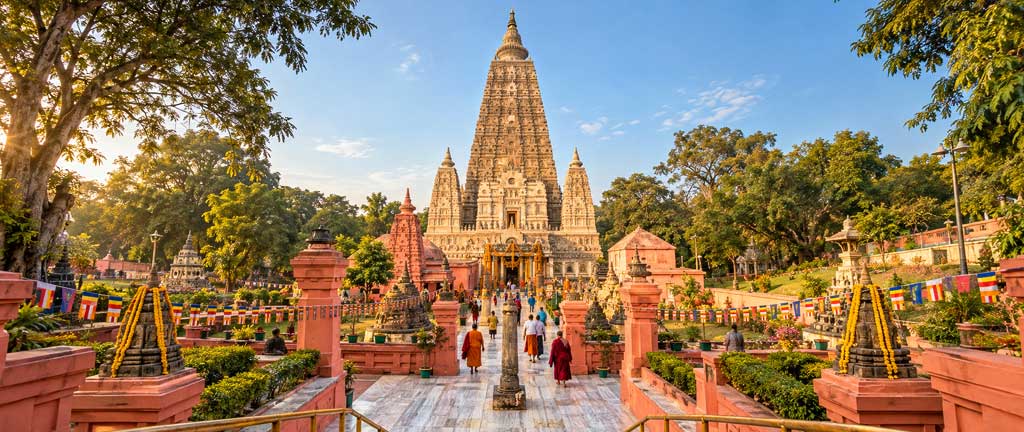
Walk or brief drive to Mahabodhi Temple Complex, one of the world’s holiest Buddhist pilgrimage sites and a UNESCO World Heritage Site.
Interpretive focus:
Historic and Spiritual Significance
- Mahabodhi Temple (literally: “Great Awakening Temple”): Marks exact location where Prince Siddhartha Gautama attained enlightenment approximately 2,500 years ago
- Under the sacred Bodhi Tree (a direct descendant of the original fig tree), Buddha sat in meditation for 49 days
- Central to all Buddhist traditions: Theravada, Mahayana, Vajrayana pilgrims converge here
- UNESCO World Heritage Site (1st century BCE original structure; current temple 5th-6th century CE reconstruction)
Temple Architecture and Design
- 170-foot (52-meter) height with distinctive conical/pyramidal structure
- Basement of 48 square feet rises cylindrically to neck section
- Top features Chatras (umbrella-like finials) symbolizing religious sovereignty
- Architectural style: Nagara temple architecture blended with Buddhist elements
- Early Indian brick temple (oldest known large-scale brick temple structure)
- Restoration: Major 1880-1950s restoration by Archaeological Survey of India; ongoing preservation work
Temple Complex Components
The Sacred Bodhi Tree
- Ancient fig tree (Ficus religiosa) in eastern chamber of temple
- Direct descendant of the original tree under which Buddha meditated
- Worshipped and circumambulated by pilgrims
- Multiple smaller trees grown from Bodhi seeds throughout complex
The Vajrasana (Diamond Throne)
- Stone platform marking exact spot of Buddha’s enlightenment
- Located immediately east of main temple
- Believed to be the most sacred point in Buddhist cosmology
- Multiple circumambulations and ritual practices performed here
Smaller Stupas and Shrines
- Numerous votive stupas (Buddhist devotional monuments) surrounding main temple
- Built by pilgrims across centuries
- Each stupa represents Buddhist aspiration toward enlightenment
International Monasteries (on complex periphery)
- Thai Monastery: Thai architectural style
- Japanese Monastery: Japanese Buddhist artistic traditions
- Tibetan Monastery: Tibetan Buddhist iconography
- Other country-specific monastic centers
Site Experience and Spiritual Engagement
Arrival and Sacred Atmosphere
- Upon entering the temple complex, most pilgrims experience profound quietude
- Soft chanting of monks meditating within
- Bodhi tree leaves rustling in gentle breeze
- Overwhelming sense of historical and spiritual weight
Circumambulation (Pradikshana)
- Walk clockwise around main temple and Vajrasana
- Ancient Buddhist practice: moving around sacred object (counterclockwise viewed from above, or clockwise from ground perspective)
- Duration: Depends on number of circuits; minimum one, often three or more
- Meditative practice: Combining physical movement with spiritual intention
Meditation Spaces
- Designated meditation areas around temple
- Peaceful zones where monks and pilgrims sit in silent contemplation
- Free access; open meditation welcome
Photography Considerations
- Camera fee: Rs. 200 for still camera, Rs. 300 for video (photo prohibition in inner sanctum)
- No electrical devices (mobile, camera, laptop) permitted inside temple; free storage available
- Excellent photography opportunities of exterior architecture, gardens, pilgrims
Visiting Hours and Chanting Sessions
- Temple open: 5:00 AM to 9:00 PM daily
- Evening arrival (4:00 PM to 6:00 PM): Experience pre-evening aarti atmosphere, quieter than daytime
- Chanting sessions: 5:30 AM to 6:00 PM (30-minute sessions held at intervals)
- Soft, meditative chanting creates profoundly spiritual environment
Evening Immersion (approximately 120 to 150 minutes)
Initial Temple Exploration (60 minutes)
- Walk through main temple chambers
- Observe Bodhi Tree and sacred interior spaces
- Sit in main prayer hall if permitted
- Observe other pilgrims’ devotional practices (offering lamps, flowers, prayers)
Circumambulation and Meditation (60 minutes)
- Perform one or more circumambulations around temple and Vajrasana
- Sit in meditation area for personal contemplation
- Observe sunset light on temple architecture (if timing aligns)
- Experience peaceful evening atmosphere
Return to Hotel and Evening Leisure (6:45 PM to 9:00 PM)
Walk back to hotel or take brief vehicle transfer. Dinner at hotel restaurant or local pilgrimage center. Early rest to prepare for Day 2’s early departure.
Overnight Stay: Bodh Gaya Pilgrimage/Heritage Hotel
Amenities: AC rooms, attached bathrooms, 24-hour hot water, multi-cuisine restaurants, pilgrim facilities, meditation spaces, WiFi, concierge assistance.
DAY 2: FULL-DAY NALANDA UNIVERSITY AND RAJGIR BUDDHIST ARCHAEOLOGICAL CIRCUIT
Very Early Morning Departure (6:00 AM to 6:30 AM)
Depart from Bodh Gaya hotel southwestward toward Nalanda University ruins. Professional Bihar Buddhist heritage guide joins expedition. AC private vehicle equipped for multi-site touring.
Journey: Bodh Gaya to Nalanda via state highways (approximately 50 to 60 km, 1.5 to 2 hours).
Breakfast En Route (6:30 AM to 7:00 AM)
Complimentary tea, coffee, and light breakfast at roadside establishment.
STATION 1: NALANDA UNIVERSITY RUINS – WORLD’S FIRST RESIDENTIAL UNIVERSITY (8:00 AM to 11:30 AM)
Approximately 50-60 km from Bodh Gaya; approximately 1.5-2 hours driving
Total exploration: Approximately 210 minutes
Arrive at Nalanda University Ruins, UNESCO World Heritage Site and one of the world’s most significant archaeological complexes related to Buddhist institutional development.
Historical Overview and Context
Founding and Development
- Founded: Approximately 5th century CE during Gupta Dynasty (reign of Kumaragupta I)
- Peak period: 5th-12th century CE (approximately 800 years continuous operation)
- Decline: 12th century CE following invasion, fire destruction, political instability, shift in Buddhist patronage
- Rediscovery: Archaeological excavation beginning 1861-62; major excavations 1915-1937 and 1974-1982
Historical Significance
- World’s first residential university: Students lived on campus, engaged in rigorous multi-year studies
- International center of learning: Attracted 10,000+ students and 2,000+ teachers from China, Japan, Korea, Tibet, Central Asia, Southeast Asia
- Curriculum: Buddhist philosophy, logic, grammar, epistemology, medicine, mathematics, linguistics
- Faculty: World-renowned Buddhist masters and scholars; teaching monastics of highest caliber
- Manuscripts: Approximately 9 million books and manuscripts in multiple languages
- Institutional model: Template for educational institutions across Asia
Architectural Complexity and Scale
- Spread across 30 acres
- Sophisticated urban planning: Separate zones for teaching, residential, administrative, devotional functions
- Multiple distinct monasteries (viharas): Each housed 200+ monks
- Teaching halls (mandapas): Large open or covered spaces for lectures and debates
- Libraries: Multiple library buildings with sophisticated organization and preservation systems
- Temples and stupas: Devotional and ceremonial centers
- Refectories, baths, wells: Supporting monastic community
- Walls and gates: Defensibility and controlled access
Excavation Evidence and Archaeological Interpretation
Your specialist guide will interpret excavated remains according to evidence hierarchy:
Archaeologically Verified Structures
- Exposed brick and stone foundations revealing building layouts
- Stratigraphic evidence showing occupation layers and chronological development
- Artifact concentrations indicating functional spaces (teaching areas, residential quarters, religious centers)
- Burned layers evidence of destruction events (12th-13th century CE fires)
Recovered Artifacts
- Buddha and Bodhisattva statuary: Multiple artistic periods and styles
- Terracotta figurines: Devotional and utilitarian objects
- Seals and sealings: Monastic administrative records, library organization systems
- Inscriptions: Sanskrit records of donor names, monastic regulations, scholarly commentary
- Coins: Economic evidence of institutional wealth and trade connections
- Pottery and domestic artifacts: Daily monastic life evidence
Scholarly Interpretations
- Economic models: How institution sustained 12,000+ residents
- Educational structures: How teaching and learning organized across centuries
- Religious evolution: How Buddhist institutional practices developed
- Decline theories: Multiple factors (invasion, economic change, Hindu revival) leading to abandonment
Walking Tour Through Excavated Complex (approximately 150 minutes)
Zone 1: Main Monastic Area and Temples (60 minutes)
Walk through principal monastic structures, observing:
- Exposed brick foundations and walls showing individual monastery units
- Main temple platform and central worship space
- Multiple stupa structures and devotional centers
- Layout revealing multi-story buildings (from archaeological remains)
- Interpretation: How monastic communities organized daily life, worship, scholarship
Zone 2: Teaching Halls and Debate Spaces (45 minutes)
Visit large open or columned areas where thousands of students gathered for lectures:
- Multiple teaching levels suggesting simultaneous classes
- Central debating platform for philosophical contests
- Acoustic considerations in architectural design
- Evidence of sophisticated pedagogical approach
Zone 3: Residential Quarters and Individual Cells (30 minutes)
Observe monastic cells where individual students and teachers lived:
- Single or double rooms with minimal furnishings
- Personal altars and meditation spaces
- Shared facilities (bathing, dining)
- Evidence of extreme simplicity and renunciation
Zone 4: Library and Manuscript Preservation (15 minutes)
Walk through library locations:
- Evidence of manuscript storage systems
- Awareness of sophisticated preservation techniques for palm-leaf manuscripts
- Understanding of how knowledge was organized and transmitted
- Consideration of intellectual scale: 9 million manuscripts
On-Site Museum (if accessible; approximately 30 to 45 minutes)
Visit Nalanda Archaeological Museum displaying:
- Buddha and Bodhisattva statuary across multiple artistic periods
- Terracotta figurines and decorative architectural elements
- Seals and inscriptions providing documentary evidence
- Photographs and drawings of excavation progress
- Chronological arrangement showing institutional evolution
Lunch Break (11:30 AM to 12:30 PM)
Lunch at local restaurant in Nalanda or on return route to Rajgir (approximately 12 km, 20 to 30 minutes driving).
STATION 2: RAJGIR BUDDHIST SACRED SITES – WHERE BUDDHA TAUGHT AND MEDITATED (1:00 PM to 5:00 PM)
Approximately 12 km from Nalanda; approximately 20 to 30 minutes driving
Total exploration: Approximately 240 minutes
Arrive at Rajgir, historic town surrounded by emerald-green hills, deeply connected to Buddha’s life and teachings.
Interpretive focus:
Rajgir’s Historical Importance
- Ancient Rajgriha: Capital of Magadha kingdom during Buddha’s time (6th-5th century BCE)
- King Bimbisara: Contemporary of Buddha, devout follower, major patron of monastic community
- King Ajatshatru: Son of Bimbisara, also important patron (though complex relationship with father)
- Buddha’s frequent residence: Rajgir was one of Buddha’s favorite places to teach and spend rainy seasons
- First Buddhist Council: Held at Saptaparni Cave (after Buddha’s death) where senior disciples codified teachings
Sacred Sites Exploration
Site 1: Griddhakuta Hill (Vulture’s Peak) and Vishwa Shanti Stupa (90 minutes)
Approximately 1.5 km from central Rajgir
Ascent Options:
- Scenic ropeway: Approximately 10 to 15 minute cable car ride offering panoramic views
- Walking trail: Approximately 45 to 60 minutes moderate trek through natural landscape
At the Peak:
- Standing on Griddhakuta (approximately 400 meters elevation), observe panoramic views of Rajgir valley
- Multiple Buddhist stupas and meditation platforms
- Ajatshatru’s Stupa: Built by King Ajatshatru in devotion to Buddha
- Ancient Brahmi inscriptions on hillside
Vishwa Shanti Stupa (Peace Pagoda):
- Modern white marble stupa built by Japanese Buddhists
- Symbolizes peace and non-violence promotion
- International Buddhist pilgrimage site
- 360-degree views from top of Ratnagiri Hill
- Serene meditative atmosphere
Buddha’s Connection to Griddhakuta:
- Sacred site where Buddha delivered numerous important sermons
- Fire Sermon: Famous teaching delivered here, emphasizing impermanence
- Lotus Sutra teachings: Reported preached on this hill
- King Bimbisara and Ajatshatru: Frequently visited Buddha here for teachings and conversations
- Meditation and contemplation: Buddha would withdraw to Griddhakuta for meditation practice
Spiritual Experience:
- Sit in meditation areas with views of sacred valley
- Experience profound quietude and spiritual energy concentrated in place
- Observe contemporary pilgrims’ devotional engagement
- Understanding landscape’s role in Buddhist practice: remoteness, natural beauty, defensibility
Site 2: Venuvana Vihara (Bamboo Grove Monastery) (60 minutes)
Approximately 3 km from central Rajgir
Historical Significance:
- Bamboo grove gifted to Buddha by King Bimbisara
- One of Buddha’s principal residences and teaching centers
- Served as monastic retreat during rainy seasons (Vassa period)
- Seminal Buddhist discourses delivered here
- Marked transition from wandering asceticism to settled institutional monastic life
Interpretive Engagement:
Architecture and Layout:
- Exposed brick foundation remains revealing monastery structure
- Separate areas for teaching, residential cells, meditation, communal gathering
- Simple architectural design reflecting ascetic values
- Evidence of long-term occupation across centuries
Spiritual Significance:
- Sacred site where Buddha and community spent extended time
- Connection between natural landscape (bamboo grove) and spiritual practice
- Understanding monastic community organization during Buddha’s lifetime
- Role of royal patronage in institutional development
Contemporary Monastic Community:
- Active pilgrimage site with meditation platforms
- Monks and pilgrims from multiple countries engage in practice
- Maintained gardens and pathways
- Peaceful, meditative atmosphere conducive to spiritual engagement
Walking Meditation:
- Walk slowly through monastic grounds
- Sit in meditation areas overlooking valley
- Experience landscape that hosted Buddha’s teachings 2,500 years ago
- Connection between ancient and contemporary Buddhist practice
Site 3: Saptaparni Cave and Brahmakund Hot Springs (60 minutes)
Approximately 2 km from Venuvana; accessible by vehicle or walking trail
Saptaparni Cave (Seven-Leaf Cave):
- First Buddhist Council site (shortly after Buddha’s death, approximately 486 BCE)
- Senior disciples gathered to codify Buddha’s teachings into original canon
- Ancient cave dwelling and meditation site
- Connected to King Ajatshatru’s support of early Buddhist community
Archaeological and Spiritual Significance:
- Where foundational Buddhist scriptures were first formally compiled
- Evidence of intensive textual study and memorization practices
- Physical space where Buddhism’s intellectual traditions were established
- Connection to Buddha’s life: He spent time in caves during meditation practice
Brahmakund Hot Springs:
- Natural sulfur hot springs adjacent to cave
- Believed to have medicinal and purifying properties
- Ancient pilgrimage site for ritual bathing
- Optional: Travelers may bathe if interested (modern facilities available)
- Sacred bathing traditions: Both Buddhist and Hindu pilgrims visit
Interpretive Connection:
- Understanding how landscape features (caves, springs) supported monastic practice
- Role of natural elements in Buddhist spirituality (simplicity, self-sufficiency)
- Connection between body, water, purification in Buddhist practice
Return Journey: Rajgir to Bodh Gaya (5:00 PM to 7:00 PM)
Depart Rajgir by 5:00 PM, return to Bodh Gaya (approximately 50 to 60 km, approximately 1.5 to 2 hours driving). Guide provides retrospective commentary on Day 2’s exploration, comparative analysis of Nalanda and Rajgir, and preparation for Day 3.
Arrival at Bodh Gaya and Evening (7:00 PM to 9:00 PM)
Return to hotel by approximately 7:00 to 7:30 PM. Freshen up. Optional evening activity:
Option A: Evening Mahabodhi Temple Aarti and Meditation
Return to Mahabodhi Temple for evening aarti (prayer ritual) and silent meditation as twilight descends (approximately 7:00 PM to 8:30 PM).
Option B: Rest at Hotel
Dinner and rest. Early sleep for spiritual preparation.
Dinner and Overnight Stay: Bodh Gaya Hotel (Same as Day 1)
DAY 3: DEPARTURE FROM BODH GAYA
Morning Flexibility (Based on flight/train timing)
Option A: Early Departure (Flight/train before 10:00 AM)
Rise early. Optional pre-dawn visit to Mahabodhi Temple for meditation and morning chanting (5:00 AM to 6:30 AM), followed by light breakfast. Check out. Transfer to airport or railway station by approximately 7:30 to 8:30 AM.
Tour concludes.
Option B: Mid-Morning Departure (Flight/train 10:00 AM to 2:00 PM)
Rise early. Optional dawn meditation at Mahabodhi Temple (5:00 AM to 7:00 AM). Return to hotel, breakfast (7:30 AM to 8:30 AM). Optional mid-morning activity:
Choice 1: Explore international Buddhist monasteries (Thai, Japanese, Tibetan) on temple complex
Choice 2: Visit Bodhgaya Multimedia Museum or local Buddhist artifact collections
Choice 3: Rest at hotel
Lunch if time permits (12:00 PM to 1:00 PM). Check out. Transfer to airport or railway station by mid-morning to early afternoon.
Tour concludes.
Option C: Afternoon Departure (Flight/train after 2:00 PM)
Full morning at hotel. Optional mid-morning meditation or monastery visit. Lunch at hotel around 1:00 PM to 1:30 PM. Check out. Transfer to airport or railway station by early to mid-afternoon.
Tour concludes.
TOUR HIGHLIGHTS
Mahabodhi Temple and Buddha’s Enlightenment Site
- UNESCO World Heritage Site: 5th-6th century temple structure
- Sacred Bodhi Tree: Direct descendant of original
- Vajrasana (Diamond Throne): Exact enlightenment location
- 2,500-year pilgrimage tradition: One of world’s holiest Buddhist sites
- International pilgrimage: Monks and devotees from all Buddhist traditions
- Meditative atmosphere: Optimal for spiritual practice and reflection
Nalanda University Ruins and Buddhist Institutional History
- World’s first residential university (5th-12th century CE)
- Archaeological remains revealing institutional sophistication
- International center of learning: 10,000+ students from multiple countries
- Curriculum: Buddhist philosophy, logic, linguistics, medicine
- Museum artifacts: Statuary, seals, inscriptions
- Evidence of educational and monastic excellence
Rajgir Buddhist Sacred Sites and Buddha’s Teaching Landscape
- Griddhakuta (Vulture’s Peak): Where Buddha preached major sermons
- Venuvana Vihara: Bamboo grove monastery, royal patronage site
- Saptaparni Cave: First Buddhist Council site, ancient monastic center
- Brahmakund Hot Springs: Sacred natural springs, purification tradition
- Vishwa Shanti Stupa: Modern peace monument with panoramic views
- Connection to Buddha’s life: Places he walked, taught, meditated
Archaeological and Scholarly Engagement
- Evidence-based interpretation of Buddhist institutional development
- Understanding royal patronage’s role in Buddhist expansion
- Material culture revealing monastic daily life
- Inscriptions and seals documenting administrative sophistication
- Transitions: From Buddha’s lifetime through institutional Buddhism to contemporary pilgrimage
TOUR INCLUDES
- Ex. Your Bodh Gaya Hotel, Gaya Airport, or Gaya Railway Station (Pickup and drop-off)
- AC Private Vehicle throughout (2 nights, 3 days; approximately 100+ km total)
- Professional Guides:
- Day 1: Mahabodhi Temple and Bodh Gaya specialist
- Day 2: Bihar Buddhist archaeological and heritage specialist
- Two Nights Accommodation: Bodh Gaya pilgrimage/heritage hotel (Maha Bodhi Temple Hotel Trust, Indosan Nippon Buddhist Centre, or comparable 4-star establishment)
- AC rooms, double/twin sharing, attached bathrooms with 24-hour hot water
- Daily Breakfast at hotel (Days 2 and 3 as applicable)
- Complimentary Tea and Light Snacks: Morning departures and transit breaks
- Lunch on Day 2: At local restaurant (vegetarian and non-vegetarian options)
- All Sightseeing as mentioned in itinerary:
- Mahabodhi Temple Complex (Days 1 and 3 optional evening/morning)
- Nalanda University Ruins and Museum
- Griddhakuta (Vulture’s Peak) and Vishwa Shanti Stupa
- Venuvana Vihara
- Saptaparni Cave and Brahmakund Hot Springs
- Nalanda Site Entry and Museum (approximate Rs. 200-300 per person for foreigners)
- Rajgir site access (free or nominal fees)
- Ropeway to Griddhakuta (if used; approximately Rs. 100 to 150 per person)
- All Local Transfers: Hotel to sites, site to site, return to hotel/airport/station
- Parking and Access Fees at all locations
- Complimentary Water and refreshments throughout
TOUR EXCLUDES
- GST (5% added at billing)
- Card Charges (3% if applicable)
- Air Fare or Train Fare to Gaya (arrival from Kolkata or other locations)
- Dinner on Days 1 and 2
- Personal Expenses (tips, beverages beyond complimentary offerings, souvenirs, shopping)
- Monastery donation (though encouraged, strictly voluntary)
- Travel Insurance
- Contingency Expenses
- Whatever is Not Mentioned in Tour Includes
BEST TIME TO VISIT
- October to March (cool, dry season; ideal for pilgrimage and outdoor exploration)
- Daytime temperatures: 15 to 25 degrees Celsius
- October-November and February-March: Peak season (excellent weather, clear skies)
- Special Events:
- Buddha’s Birth (Vaisakh Full Moon, typically May): Major pilgrimage festival at Mahabodhi
- Bodhi Day (December 8): Celebrates Buddha’s enlightenment
- Buddhist pilgrimage seasons: Year-round international monastic delegations
- Minimize: May-September (extreme heat, monsoon rains, reduced pilgrim season)
IMPORTANT INFORMATION
Physical Requirements
- Moderate fitness level: Multiple hours daily on-site walking, temple stairs, hillside climbing
- Griddhakuta ascent: Via ropeway (10-15 min) or trekking (45-60 min moderate trail)
- Venuvana and Saptaparni: Walking through rural landscape and archaeological remains
- Mahabodhi Temple: Numerous stairs and frequent circumambulations (optional but encouraged)
- Suitable for ages 7 and above; active seniors manageable with support
What to Bring
- Sturdy closed-toe walking shoes (essential for hillside sites)
- Sun hat, cap, or headscarf (essential sun protection)
- Sunscreen (SPF 30+), insect repellent, light shawl or stole
- Water bottle (2 liters recommended for longer days)
- Light layers; modest clothing for temples
- Camera and charging cables
- Phone charger and power bank
- Any personal medications
- Notebook and pen (many pilgrims write intentions or reflections)
- Basic medicine (digestive tablets, pain relievers)
Dress Code
- Comfortable, casual clothing appropriate for pilgrimage sites and archaeological exploration
- Layers recommended (cool mornings/evenings, warm afternoons)
- Modest dress essential at temples and monastic centers
- Avoid revealing or offensive clothing
- Footwear: Slip-on sandals for temple removal; sturdy hiking shoes for hillside exploration
Nutrition and Hydration
- Complimentary breakfasts at hotel (Days 2 and 3)
- Packed/restaurant lunch on Day 2
- Dinner at guest’s cost (hotel restaurants and local pilgrimage centers offer multiple options)
- Complimentary tea, coffee, and light snacks at hotel and transit
- Pilgrimage centers traditionally offer vegetarian meals
- Bring extra water or electrolyte drink for personal hydration
- Bodh Gaya has adequate restaurants; multiple cuisine options
Weather Preparedness
- October to January: Cool mornings/evenings; light jacket needed; clear skies
- February to March: Warm days, cool mornings; sun protection essential
- Avoid May-September (extreme heat, humidity, monsoon rains)
Communication and Safety
- Mobile coverage excellent in Bodh Gaya and Rajgir
- Nalanda has good coverage but some rural areas patchy
- Carry guide’s contact number for emergencies
- Vehicle equipped with first-aid kit and emergency communication
- Bodh Gaya generally safe for pilgrims and tourists; standard precautions apply
- All activities conducted during daylight; evening programs conclude by 8:00 PM
Photography
- Permitted at temples and archaeological sites
- Camera fee at Mahabodhi: Rs. 200 for still, Rs. 300 for video
- No photography allowed in temple inner sanctums
- Excellent photography opportunities for sacred architecture, landscape, spiritual practice
- Ask permission before photographing monks or devotees in meditation
- Restrictions at Nalanda and Rajgir: Limited commercial photography
Duration and Pacing
- This is a high-engagement, multi-site tour spanning approximately 100+ km across 2.5 to 3 days
- Day 2 involves 8+ hours of driving and approximately 5 to 6 hours on-site exploration
- Suitable for motivated pilgrims and heritage seekers
- Not advisable for travelers unable to tolerate sustained physical activity
- Recommend early meditation and sleep evening before Day 2 departure